
Blog · Land
Plotted Development in Bangalore: How It Works for Buyers
What plotted development in Bangalore means, how land becomes registered plots, the approval at each stage, and how buying a plot compares with a flat.
By the Homes in Bangalore editorial teamLast reviewed 5 min read1,192 words
Short answer
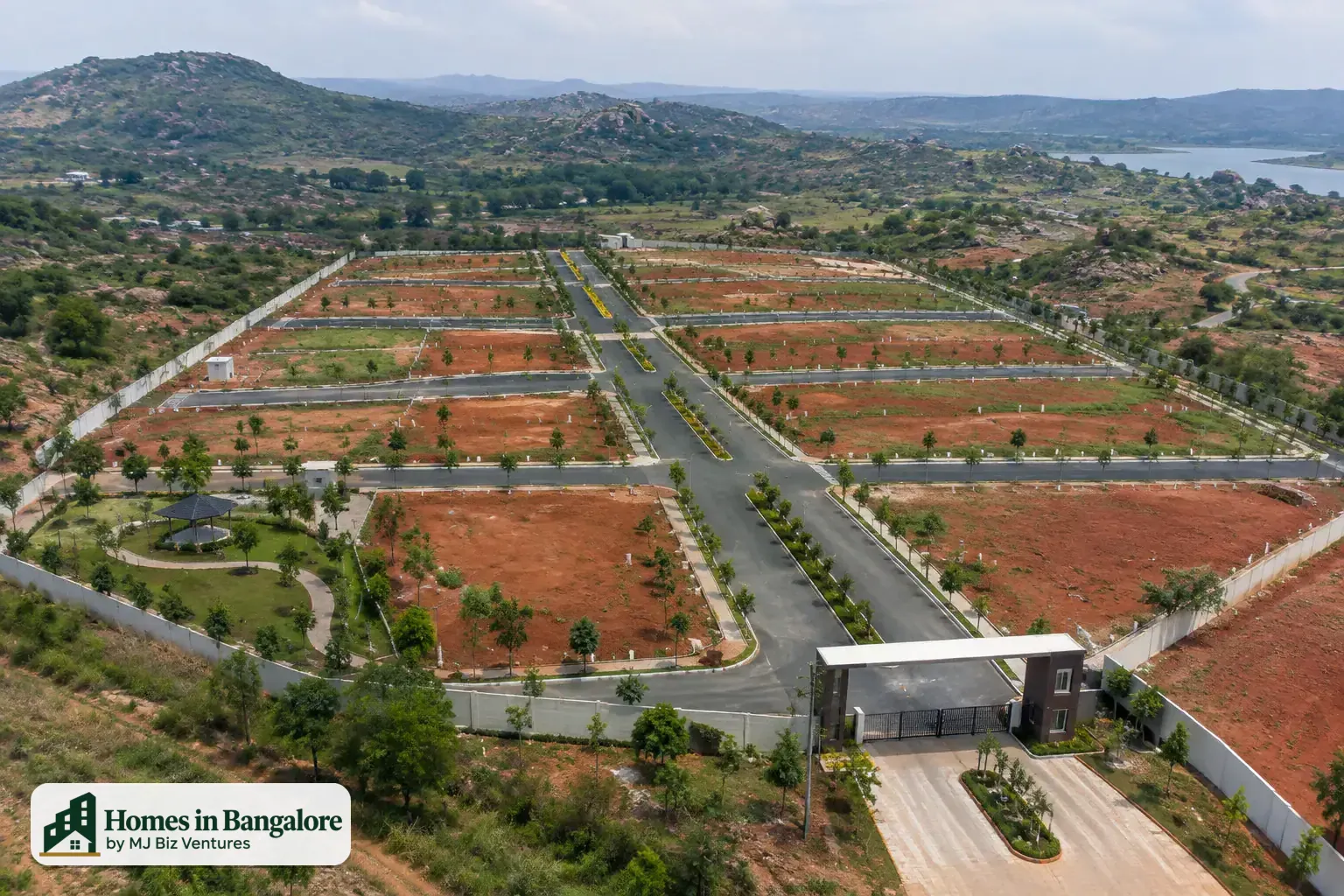
Plotted development in Bangalore is a real estate project in which a developer, a government agency or a landowner converts land to residential use, gets a layout plan approved, builds roads, drains and utility lines, and sells individual plots. Buyers get a demarcated plot with its own title and build their own house. Each stage needs an approval, and those approvals are what you verify before buying.
Key takeaways
- ◆A plotted development is a project in which land is converted, approved as a layout, given roads and services, and sold as individual plots.
- ◆Each stage leaves a document: conversion order, approved layout plan, relinquishment deed, plot release order, RERA registration, sale deed and khata.
- ◆Plots give you land ownership and freedom to build, but no rental income until you build and usually lower liquidity than apartments.
- ◆Plotted projects above the threshold must be registered with Karnataka RERA before they are marketed (verify current threshold).
How a plotted development works, stage by stage
Most plotted projects around Bengaluru follow the same broad sequence. Knowing it helps you judge how far along a project is and which documents should already exist when you are asked to pay.
| Stage | What happens | Document to ask for |
|---|---|---|
| Land assembly | Developer buys land or signs a joint development agreement with owners | Title deeds; JDA and power of attorney if applicable |
| Conversion | Deputy Commissioner permits residential use | Conversion order |
| Layout approval | Planning authority sanctions plots, roads, parks and civic amenity sites | Approved layout plan and approval letter |
| Relinquishment | Roads, parks and civic amenity sites handed to the local authority | Relinquishment deed |
| Infrastructure | Roads, drains, water, power and sewer lines are built | Inspection or completion records (verify) |
| Plot release | Authority permits sale of listed plots, often in stages | Plot release order |
| RERA and sale | Project registered and plots sold by registered sale deed | RERA registration and sale deed |
| Khata | Plot entered in the local property register | Khata or e-Khata |
Types of plotted development in Bangalore
Plotted projects range from large government layouts to small private ones. The type affects who you deal with, which documents exist and how the layout is managed after sale.
- Government layouts: sites developed by the Bangalore Development Authority (opens official website) or the Karnataka Housing Board (opens official website) and allotted or auctioned under their own rules
- Open private layouts: approved layouts with public roads and no gate, where the local body takes over upkeep after handover
- Gated plotted communities: approved layouts with a compound wall, security and shared amenities, maintained by the developer and then an owners' association
- Villa plot projects: gated layouts aimed at independent houses, often with design guidelines or an optional construction contract
- Joint development layouts: projects where landowners contribute land and share plots or revenue with the developer
Plots vs apartments: the trade-offs
Plots and flats suit different goals. A plot gives you ownership of a demarcated piece of land and freedom to build when and how you like, within the bye-laws. An apartment gives you a finished home and an undivided share of the land, with rental income possible as soon as it is ready.
| Factor | Plot in a plotted development | Apartment |
|---|---|---|
| What you own | A demarcated plot with its own boundaries | A flat plus an undivided share of the land |
| Income | None until you build | Rent possible once the flat is ready |
| Flexibility | Build when and how you choose, within the bye-laws | Fixed design |
| Upkeep before use | Fencing, cleaning and encroachment checks | Maintenance charges |
| Liquidity | Often lower; depends on location and paperwork | Generally higher in established areas |
| Main risks | Approvals, title and encroachment | Construction delay and developer risk |
What to verify before buying in a plotted project
Ask for the documents in the stage table and have an independent advocate confirm them with the issuing offices. Check that survey numbers, extent and plot numbers match across the conversion order, approved layout plan, RERA filing and draft sale deed. Our residential plot buying checklist covers the on-site checks, such as boundaries, road width and drainage.
Also judge the project's progress on the ground. A layout with roads and drains complete and plots released carries less risk than one where only marker stones are in place.
Who regulates plotted development?
Several bodies are involved. The Deputy Commissioner of the district issues conversion orders. Layout approval comes from the planning authority for the area: the Bangalore Development Authority within its local planning area, local planning authorities under the Bangalore Metropolitan Region Development Authority further out, or BIAAPA near the airport (verify for the survey number).
Karnataka RERA (opens official website) registers plotted projects above the threshold and holds their disclosures. After plots are sold, the local body issues khatas and building plan sanctions. City governance has been restructured under the Greater Bengaluru Authority, so confirm which body now handles each step for your plot (verify).
How to check a plotted development before booking
- 1Get the RERA numberSearch the project on the Karnataka RERA portal and download the registered layout plan and approvals.
- 2Collect the approval setAsk for the conversion order, approved layout plan, relinquishment deed and plot release order.
- 3Verify titleHave an independent advocate review the title chain, RTC and encumbrance certificate for the parent land.
- 4Inspect the siteCompare roads, parks and your plot's boundaries with the approved plan, with a surveyor if possible.
- 5Check your plot's paperworkConfirm your plot number appears in the release order and that the draft sale deed matches the plan.
- 6Register and get the khataRegister the sale deed and apply for the khata or e-Khata in your name.
Frequently asked questions
What does plotted development in Bangalore mean?+
It means a project in which land is converted to residential use, approved as a layout with roads, parks and civic amenity sites, provided with services and sold as individual plots. Private developers, government agencies such as the BDA and KHB, and landowners in joint development all create plotted developments. Buyers get a demarcated plot and build their own house under a plan sanction.
Is a plotted development better than an apartment?+
Neither is better in general. A plot gives you land ownership and design freedom, but no income until you build and usually lower liquidity. An apartment gives you a ready home and possible rent from the start, with an undivided share of land. Choose based on your budget, timeline, willingness to manage construction and how soon you need to live in or rent the property.
Does a plotted development need RERA registration?+
Under the Real Estate (Regulation and Development) Act, plotted projects above the registration threshold must be registered with Karnataka RERA before they are advertised, marketed or sold, while smaller projects may be exempt (verify the current threshold). Registration means disclosures have been filed, not that the title is clean, so you still need independent verification by an advocate.
Can I build immediately after buying a plot?+
You can apply for a building plan sanction once the sale deed is registered and the khata or e-Khata is in your name, provided the planning authority has released the plot. The house must comply with the building bye-laws and any layout guidelines. Ask the local body or your architect how long a plan sanction currently takes before you schedule construction (verify).
Sources
Useful next steps