
Property management
Managing a Bengaluru property remotely: options and costs
How to manage a Bengaluru property from another city or country: family, self-management or a manager, plus documents, bills, inspections and emergencies.
By the Homes in Bangalore editorial teamLast reviewed 7 min read1,591 words
Short answer
You can manage a Bengaluru property remotely through a trusted family member or friend, by doing it yourself with online payments and local contractors, or by appointing a professional property manager. Whichever you choose, give your representative written authority, keep digital copies of every document, automate bills and dues, schedule regular inspections, and agree in advance what counts as an emergency and how much can be spent without your approval.
Key takeaways
- ◆Owners managing a Bengaluru property from afar usually choose between a family member or friend, self-management with digital tools, or a professional property manager.
- ◆The trade-off is cost against control and reliability: the cheaper the arrangement, the more of your own time and follow-up it usually needs.
- ◆Set up written authority first, such as an authorisation letter or a specific power of attorney, so someone can act for you with the association, utilities and tenants.
- ◆Automate recurring payments, keep a digital document vault, and agree an emergency protocol with a spending limit before anything goes wrong.
- ◆NRI owners usually receive rent into an NRO account and should take a chartered accountant's advice on tax, TDS and repatriation.
Your three main options
A family member or friend in Bengaluru costs little or nothing in fees and knows you well. The risk is reliability: they have their own commitments, may not know tenancy practice, and relationships can strain if something goes wrong. This works best for a vacant home or a long-standing, low-maintenance tenant.
Self-management with tools suits owners who are organised and reachable during Indian working hours. Bill payments, rent collection and even inspections can be handled online or by video, but you still need reliable local people for keys, repairs and viewings, and you carry all the follow-up.
A professional property manager handles tenant placement, rent collection, inspections, maintenance and bill coordination for a fee, usually a monthly charge or a percentage of rent. It costs the most in direct fees but frees your time and adds process and accountability. Check what is included, how contractors are billed and how you can exit the contract.
Cost versus control: the options compared
Use the comparison below to match an option to your situation. Many owners combine them, for example a manager for tenancy work and a relative as a second key holder.
| Factor | Family or friend | Self-managed with tools | Professional manager |
|---|---|---|---|
| Direct cost | Low or none, plus goodwill | Low: app and payment fees, occasional local help | Highest: monthly or percentage-of-rent fee, plus GST |
| Your time | Moderate: coordinating and checking in | High: you handle every task and follow-up | Low: you approve decisions and read reports |
| Control | Shared and informal | Full, but from a distance | Delegated within written limits |
| Tenancy expertise | Varies | Depends on your own knowledge | Usually strongest, with set processes |
| Emergency response | Depends on their availability | Slow unless you have local contacts | Defined response process |
| Records and reporting | Often informal | As good as your own systems | Regular statements and inspection reports |
| Best for | Vacant homes and simple tenancies | Organised owners in nearby time zones | Busy owners, NRIs and multiple properties |
Paying bills and dues remotely
Most recurring Bengaluru property payments can be made online. Set up autopay or reminders for each, and agree clearly which ones the tenant pays and which you pay, so nothing falls through the gap. Save every receipt in your document folder.
| Payment | Usually paid by | How to stay on top of it |
|---|---|---|
| Electricity (BESCOM) | Tenant during a tenancy; owner when vacant | Check the account and dues at each handover |
| Water (BWSSB or association) | Tenant during a tenancy; owner when vacant | Ask for paid bills with the monthly rent statement |
| Association maintenance | As agreed; often the tenant in apartments | Request a no-dues confirmation periodically |
| Municipal property tax | Owner | Pay online each year and keep the receipt (verify the current portal) |
| Piped gas and internet | Tenant | Confirm final bills are paid at move-out |
| Home loan EMI | Owner | Standing instruction from your bank account |
Inspections from a distance
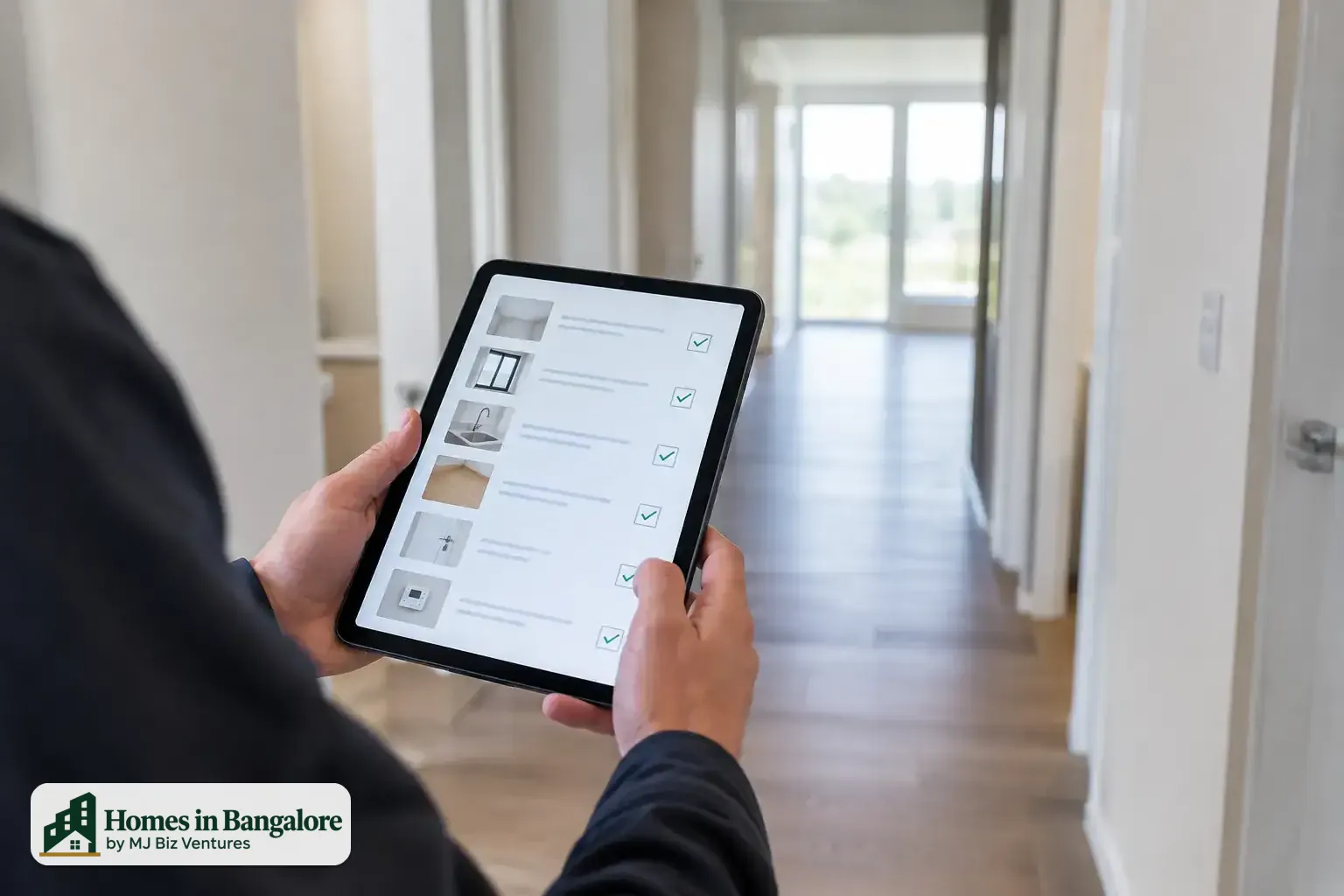
Regular inspections catch problems while they are small. For a tenanted home, periodic checks with notice to the tenant are reasonable; for a vacant home, more frequent checks for leaks, damp, pests and security are wise, particularly before and during the monsoon.
Live video walkthroughs let you see the home without travelling. Ask for an unedited live call rather than a pre-recorded clip, and request close-ups of known weak spots such as bathroom ceilings, balcony drains and window frames. Combine video inspections with a fuller in-person visit whenever you are in Bengaluru.
Handling emergencies
Most remote-ownership emergencies are water leaks, electrical faults, lockouts and security incidents. Decide in advance who the first responder is, which plumber and electrician they will call, and how much they can spend without waiting for your approval. Share this protocol with your tenant and your representative.
Keep a contact sheet with your representative, the association's facility manager and security desk, your preferred contractors and India's emergency number, 112. After any emergency, ask for photos of the problem and the repair, and the invoice, before you reimburse.
Points for NRI owners
If you live abroad, rent from your Bengaluru property is usually received into an NRO account, and tenants paying a non-resident landlord are generally required to deduct TDS. Repatriating funds and claiming relief in your country of residence involve rules that change, so work with a chartered accountant in India. Our NRI rental income guide covers the basics.
Time zones matter more than people expect. Agree a fixed weekly or fortnightly check-in slot with your representative, and use shared folders so statements, bills and reports are in one place.
How to set up remote management of a Bengaluru property
- 1Choose your modelDecide between a family member, self-management or a professional manager, based on your time, budget and the property's needs.
- 2Give written authoritySign an authorisation letter or specific power of attorney that covers only the tasks your representative will perform.
- 3Build a document vaultScan ownership papers, agreements, account numbers and inspection reports into a shared, secure folder.
- 4Automate paymentsSet up autopay or reminders for tax, EMI and owner-paid dues, and agree which bills the tenant pays.
- 5Schedule inspectionsAgree a calendar of video and in-person inspections, with extra checks before the monsoon.
- 6Agree an emergency protocolName a first responder, preferred contractors and a spending limit, and share the plan with your tenant.
Frequently asked questions
Can I manage my Bengaluru flat while living abroad?+
Yes. Many NRIs manage Bengaluru property through a family member, by self-managing with online payments and local contractors, or through a professional property manager. You will need written authority for whoever acts for you, digital copies of key documents, automated bill payments and a clear emergency plan. Rent is usually received into an NRO account, and a chartered accountant should advise on tax.
Do I need a power of attorney to rent out my property from abroad?+
Not always, but it often helps. If someone in India will sign the rental agreement, handle the deposit or deal with registration on your behalf, a specific power of attorney drafted by an advocate is common. Signed abroad, it typically needs attestation and adjudication for stamp duty once in India. For simpler tasks, an authorisation letter may be accepted (verify current process).
How often should a remotely owned property be inspected?+
There is no fixed rule, but a tenanted home benefits from periodic inspections with notice to the tenant, and a vacant home needs more frequent checks for leaks, damp, pests and security. Add an extra check before and during the monsoon. Live video walkthroughs work well between in-person visits, as long as they are unedited and cover known weak spots.
What does a property manager do for an owner who lives elsewhere?+
A property manager typically finds and screens tenants, coordinates the rental agreement, collects rent, conducts move-in, periodic and move-out inspections, arranges repairs and keeps an eye on bills and association dues. They report to you with statements and photos. Check the contract for the fee, what is included, repair approval limits, how contractors are billed and the exit terms.
How do I handle an emergency repair when I'm not in Bengaluru?+
Agree an emergency protocol before anything goes wrong. Name a local first responder, list a trusted plumber and electrician, and set a spending limit they can approve without waiting for you. Share the plan with your tenant and the association's facility manager. After the repair, ask for before and after photos and the invoice before you reimburse anyone.
Sources
Useful next steps
Property management services for this