
Property management
Move-in and move-out inspections: a guide for Bengaluru rentals
How to run documented move-in and move-out inspections: a room-by-room checklist, photos, meter readings, the fair-wear standard and deposit settlement.
By the Homes in Bangalore editorial teamLast reviewed 8 min read1,682 words
Short answer
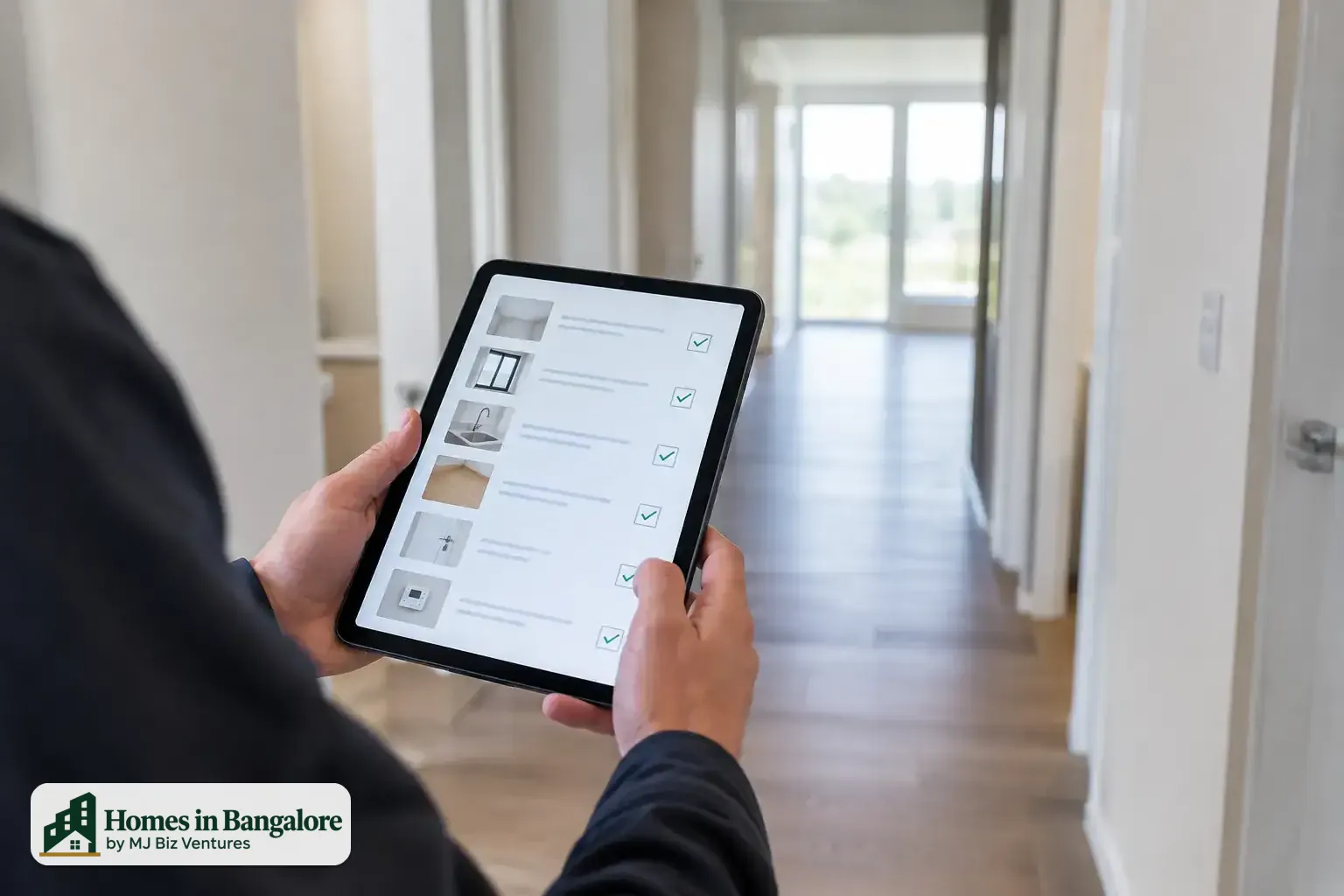
A move-in inspection records the condition of a rental home, its fittings and inventory, and the meter readings on the day the tenant takes possession. A move-out inspection repeats the same walk-through when the tenant leaves and compares the two. Done properly, with dated photos, a room-by-room checklist and both parties' signatures, the reports turn deposit settlement from an argument into a simple comparison.
Key takeaways
- ◆A move-in inspection is a dated, signed record of the home's condition and inventory at the start of a tenancy, and it is the benchmark for every move-out deduction.
- ◆Photograph or film every room in daylight, with close-ups of existing defects, and record electricity, water and gas meter readings on both days.
- ◆At move-out, compare the home with the move-in report and charge only for damage beyond fair wear and tear, adjusted for the item's age.
- ◆Both landlord and tenant should sign each report and keep a copy, shared by email or messaging app the same day so the date can't be disputed.
Why documented inspections matter
Without a starting record, nobody can prove whether a cracked tile or a stained mattress was there before the tenant moved in. Landlords end up absorbing damage they can't evidence, and tenants lose deposit money for problems they didn't cause. A signed report removes the guesswork for both sides.
Inspections also catch maintenance problems early. Damp patches, slow leaks and failing sealant are easy to miss in daily life but obvious during a structured walk-through, and they are far cheaper to fix early, especially before the monsoon.
Finally, the reports are useful evidence if a dispute reaches mediation or a legal forum. Clear, dated records carry more weight than recollections.
What to prepare before an inspection
Schedule the inspection in daylight with both the landlord, or their manager, and the tenant present. An empty home is ideal at move-in; at move-out, the tenant's belongings should already be removed so floors, walls and storage are visible.
- A copy of the rental agreement and its inventory schedule
- A printed or digital room-by-room checklist
- A phone with the camera's date stamp or metadata enabled
- A torch for cupboards, under sinks and behind appliances
- All keys, access cards and remotes listed in the agreement
- Recent electricity, water and gas bills, to match meter numbers
- The move-in report, when doing the move-out inspection
Room-by-room inspection checklist
Walk through the home in the same order every time, so nothing is skipped and the move-out report lines up with the move-in report. For each item, note its condition in plain words (new, good, fair, worn or damaged), describe any defect and where it is, and cross-reference the photo.
| Area | What to check | What to record |
|---|---|---|
| Entrance and living room | Main door, locks, walls, flooring, switches, fans, lights, windows and grilles | Defects with location, number of keys, working lights and fans |
| Bedrooms | Wardrobes and shutters, locks, walls, flooring, windows, curtains, AC units | Shutter alignment, stains, AC remote and working status |
| Kitchen | Counter, sink and tap, cabinets, chimney, hob, water purifier, gas point, exhaust | Burns, chips, leaks under the sink, appliance models and condition |
| Bathrooms | Taps, shower, flush, washbasin, geyser, tiles, grout, exhaust fan, drains | Leaks, cracked tiles, geyser status, water pressure |
| Balcony and utility area | Floor slope and drainage, grilles, washing machine point, drying rack | Water stagnation, rust, fixtures present |
| Walls and ceilings (all rooms) | Paint, damp patches, cracks, seepage marks, nail holes | Location and size of each mark |
| Electricals | Sockets, switches, distribution board, inverter or power backup | Non-working points and backup status |
| Meters and services | Electricity, water and gas meters, internet point | Meter numbers and readings, with photos |
| Inventory | Furniture, appliances, curtains, remotes, keys, access cards | Count, brand or model, and condition |
Photos, videos and meter readings
Take a wide photo of each room from the doorway, then close-ups of every existing defect with something for scale, such as a coin or tape measure. A continuous walk-through video, narrated with room names, is a useful backup. Keep the original files rather than edited or compressed copies, because the metadata shows when they were taken.
Photograph each meter so the meter number and the reading are both legible, and write the readings into the report. Final electricity and water bills at move-out are usually settled from these readings, so they matter as much as the condition notes. Share the photos and the signed report by email or messaging app on the same day; the timestamp becomes part of the record.
The fair-wear standard
Fair wear and tear, often called normal wear and tear, is the deterioration that comes from ordinary, careful living over time. Tenants are generally not responsible for it. Damage, by contrast, is harm from misuse, neglect or accident, and the tenant who caused it can fairly be asked to pay for the repair.
Two adjustments keep deductions fair. First, consider the length of the tenancy: a few scuffs after one year are different from the same marks after five. Second, consider age: if a five-year-old curtain is torn, charging the price of a new one gives the landlord an upgrade at the tenant's expense, so charge a reasonable share of the replacement cost instead.
- Usually fair wear: light fading, minor scuffs, small picture-hook holes, worn grout, loosened hinges
- Usually damage: burns, large stains, broken glass, tiles cracked by impact, unapproved drilling, missing inventory
- Depends on the agreement: repainting, deep cleaning, AC servicing and pest control at move-out
Running the move-out inspection
Agree the inspection date when notice is given, and ask the tenant to remove belongings and clean before the walk-through. Use the move-in report as the checklist and walk the rooms in the same order. For each change, decide together whether it is fair wear, damage, or something the agreement assigns to one party.
Record the final meter readings, collect every key, card and remote on the inventory, and note anything missing. Both parties should sign the move-out report even if they disagree on some items; note the disagreements on the report and settle them afterwards with quotations.
Settling the deposit after the inspection
Once the inspection is complete, the landlord prepares an itemised settlement: the deposit received, deductions for unpaid rent and utility or maintenance dues, and deductions for damage, each supported by a photo and a quotation or invoice. The balance should then be refunded within the timeline in the agreement.
If a final utility bill hasn't arrived, holding back a small, clearly estimated amount and refunding it once the bill is paid is fairer than holding the whole deposit. Our security deposit guide explains reasonable deductions and what to do if the two sides can't agree.
| Line | Basis | Evidence |
|---|---|---|
| Deposit received | Amount stated in the agreement | Bank transfer reference |
| Unpaid rent or dues | Amounts outstanding at handover | Rent ledger, utility and maintenance bills |
| Damage repairs | Repair cost, adjusted for the item's age | Move-in and move-out photos, quotation or invoice |
| Agreed charges | Painting or cleaning, only if the agreement assigns them | Agreement clause and invoice |
| Balance refunded | Deposit minus deductions | Bank transfer reference |
How to run a move-in and move-out inspection
- 1Schedule a daylight walk-throughFix a time when both the landlord or manager and the tenant can attend, with the home empty and clean.
- 2Use a standard checklistWalk the rooms in a fixed order and note the condition of every surface, fitting and inventory item.
- 3Photograph and film everythingTake wide shots and close-ups of defects, plus a narrated walk-through video, and keep the original files.
- 4Record meter readingsPhotograph the electricity, water and gas meters with numbers and readings visible, and write them into the report.
- 5Sign and share the same dayBoth parties sign the report and exchange copies and photos by email or messaging app on the day.
- 6Repeat and compare at move-outUse the move-in report as the checklist, separate fair wear from damage, and record final readings.
- 7Settle the deposit with evidenceShare an itemised deduction statement with photos and quotations, then refund the balance on time.
Frequently asked questions
What should a move-in inspection report include?+
A move-in inspection report should list each room with the condition of walls, floors, fittings, appliances and furniture, describe existing defects and where they are, and reference dated photos. It should record electricity, water and gas meter readings, count keys, access cards and remotes, and attach the inventory. Both landlord and tenant should sign it and keep a copy shared on the same day.
Who should attend the move-out inspection?+
Ideally both the landlord, or their property manager, and the tenant should attend together, in daylight and after the tenant's belongings have been removed. A joint inspection lets both sides agree on the spot what is fair wear and what is damage. If one party cannot attend, they can nominate someone in writing or join by live video call.
Is repainting normal wear and tear or damage?+
Paint that has faded or picked up minor scuffs through ordinary living is generally fair wear and tear, while large stains, crayon marks or unapproved drilling are damage. Many Bengaluru rental agreements separately make the tenant responsible for repainting at move-out, and where such a clause exists, it usually governs. Check the agreement before the move-out inspection to avoid surprises.
How do I prove the condition of a flat when I moved in?+
Your best evidence is a signed move-in inspection report supported by dated photos and video, sent to the landlord by email or messaging app on the day you moved in. The timestamp and the landlord's receipt make it hard to dispute later. If no report was made, send your own photos and notes as early as possible and ask the landlord to acknowledge them.
Can a landlord charge the full replacement cost for a damaged item?+
Charging the full replacement cost is fair only when the item was new or nearly new. For older items, a fair deduction is a share of the replacement cost that reflects the item's age and remaining useful life; otherwise the landlord gets a new item paid for by the tenant. Any charge should be supported by photos and a quotation or invoice.
Sources
Useful next steps
Property management services for this