
Property management
Renting out your property in Bengaluru: a complete landlord guide
How to rent out a home in Bengaluru: preparing it, pricing rent from comparables, screening tenants, the agreement, handover, rent collection and renewal.
By the Homes in Bangalore editorial teamLast reviewed 8 min read1,787 words
Short answer
To rent out your property in Bengaluru, put your documents and association permissions in order, make the home clean and fully working, and price the rent from comparable homes nearby. Then market it, screen applicants consistently, sign a properly stamped rental agreement and hand over with a documented inspection. After that, the work is collecting rent on time, handling repairs promptly, and planning renewals or exits well ahead of the notice period.
Key takeaways
- ◆Price rent from comparable homes in the same building or micro-market, giving more weight to rents actually agreed than to asking rents.
- ◆Screen every applicant against the same written criteria: identity, income, references and police verification as required locally.
- ◆Use a properly stamped written agreement, registered where the term requires it, with clear deposit, maintenance, notice and renewal clauses.
- ◆A dated move-in inspection with photos and meter readings protects both sides and makes the deposit settlement at exit straightforward.
- ◆Rental income is taxable in India and tenants may need to deduct TDS in some cases, so involve a chartered accountant early.
Before you list: documents and permissions
Check that you can let the home without complications. If it is mortgaged, read your loan terms for any conditions on letting. If you live abroad or in another city, decide who will sign on your behalf; an authorisation letter or a specific power of attorney drafted by an advocate is common for owners who can't be present.
Apartment owners should read the residents' association by-laws. Many associations require tenant registration, a move-in form or a fee for moving furniture through common areas, and some set rules on tenants' use of amenities. Clear any outstanding maintenance dues before a tenant moves in, so they aren't caught up in an old dispute.
- Sale deed and khata, to show ownership if asked
- Latest property tax receipt
- Electricity (BESCOM (opens official website)) and water (BWSSB (opens official website)) bills, paid up to date
- Association no-dues letter and any tenant registration form
- Lender's terms, if the home is mortgaged
- Authorisation letter or power of attorney, if someone acts for you
Preparing the home for tenants
Tenants judge a landlord by whether things work on day one. Fix leaks, dripping taps, faulty switches and damp patches before you list. Repaint in neutral colours, deep clean and arrange pest control. Our rental-ready home checklist covers this in more detail.
Decide how furnished the home will be. Many long-term family and professional tenants look for semi-furnished homes with wardrobes, a modular kitchen, lights and fans. Fully furnished homes can attract relocating professionals and corporate leases, but need a detailed inventory, more upkeep and usually a higher deposit.
| Furnishing level | Typically includes | Suits | Watch out for |
|---|---|---|---|
| Unfurnished | Lights, fans, basic kitchen platform | Long-stay families with their own furniture | A smaller pool of tenants in some areas |
| Semi-furnished | Wardrobes, modular kitchen, lights, fans, geysers | Most long-term professionals and families | Fittings still need a dated inventory |
| Fully furnished | Furniture, appliances, ACs, curtains | Relocating professionals and corporate leases | Higher upkeep and more inventory disputes |
How to price rent from comparables
Rent is set by the market, not by your purchase price or EMI. Find at least five comparable homes: the same or nearby buildings, similar size and BHK, similar floor and furnishing. Note asking rents on listing portals, but give more weight to rents actually agreed, which brokers, association members and property managers often know.
Adjust for differences. A higher floor, covered parking, power backup, a metro station within walking distance or a newer building usually support a higher rent; an older building, poor ventilation or a long commute pull it down. If your home draws steady viewings but no offers after a few weeks, the price is probably the reason. Check the resulting return with our rental yield calculator.
| Factor | What to check | Effect on rent |
|---|---|---|
| Location | Same micro-market, distance to offices and metro | Usually the largest single driver |
| Size and layout | Carpet area, BHK, number of bathrooms | More usable space supports higher rent |
| Floor and aspect | Floor level, ventilation, natural light | Brighter, airier units usually rent faster |
| Amenities | Parking, power backup, lifts, clubhouse | Gated amenities support a premium |
| Condition and furnishing | Paint, fittings, appliances | Well-kept, furnished homes command more |
| Building age | Age and upkeep of common areas | Newer or well-maintained buildings fare better |
Finding and screening tenants
You can list the home yourself on portals and community groups, use a broker, or hand the process to a property manager. Self-listing saves fees but costs time on calls, viewings and filtering enquiries. A broker typically charges for placement only, while a manager also handles everything after move-in.
Screen every applicant against criteria written down before you start: verified identity for every adult, proof of income or employment, a previous landlord's reference where possible, and police verification as required locally. Apply them consistently, and avoid questions about religion, caste, diet or marital status, which say nothing about paying rent or caring for the home. Our tenant screening checklist sets out the details.
The rental agreement
Most residential tenancies in Bengaluru use an 11-month agreement on stamp paper, renewed if both sides wish. Leases of a year or more generally need to be registered at the Sub-Registrar's office (verify). Stamp duty depends on the rent, deposit and term, so check the current schedule on the Kaveri Online Services (opens official website) portal or with an advocate.
- Names, addresses and ID details of the landlord and all adult tenants
- Rent, due date, payment method and late-payment terms
- Security deposit, permitted deductions and refund timeline
- Who pays maintenance, electricity, water, gas and internet
- The repairs split between landlord and tenant
- Lock-in period, notice period and escalation on renewal
- Entry with notice for inspections and repairs
- Rules on subletting, pets and commercial use
- Inventory and condition report attached as a schedule
Handover, rent collection and maintenance
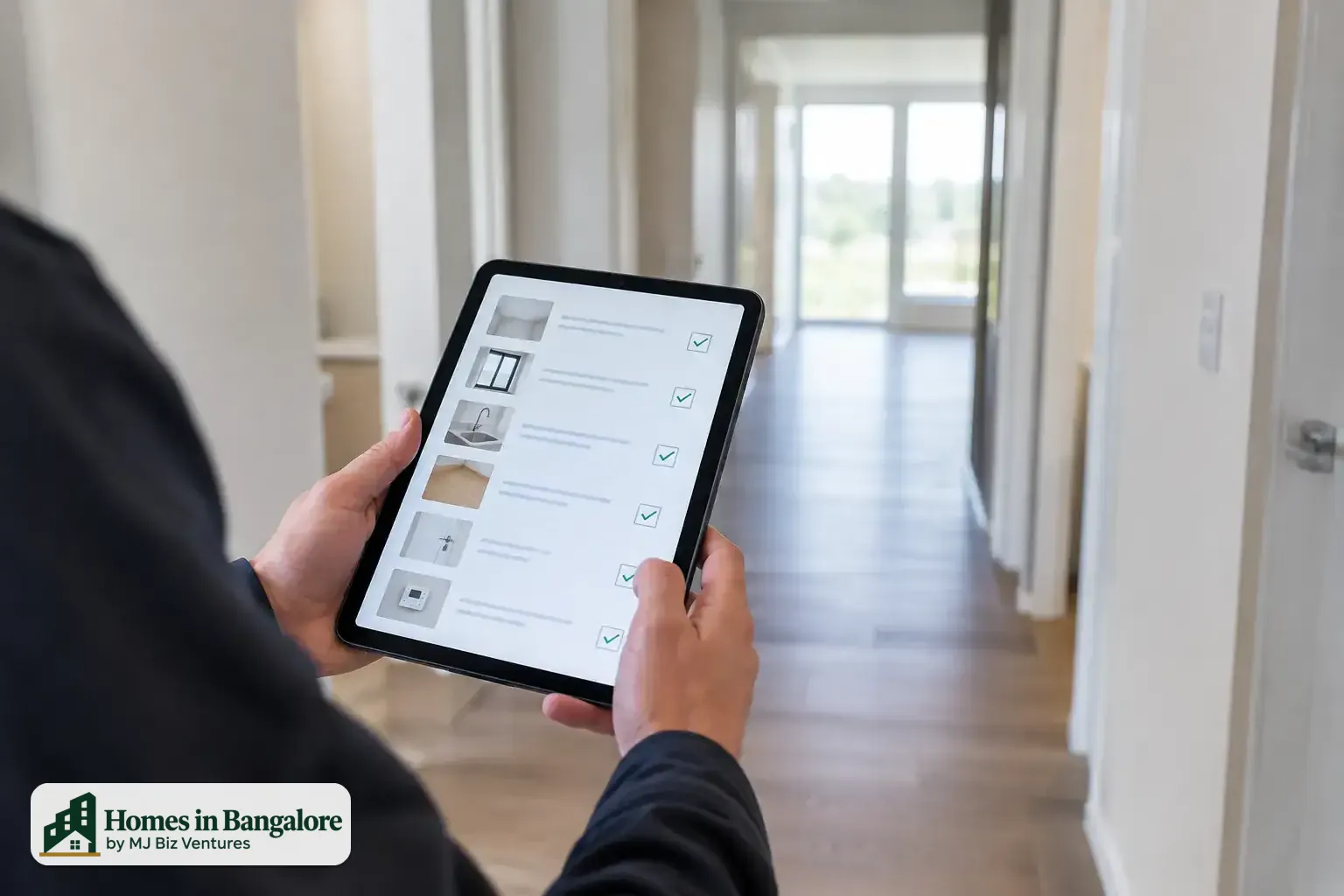
On move-in day, walk through the home with the tenant, record meter readings, photograph every room and have both sides sign the inventory. Hand over keys, access cards and the association's rules. Our move-in and move-out inspection guide has a room-by-room checklist.
Ask for rent by bank transfer or standing instruction, and issue receipts or a monthly statement. Send a polite reminder soon after a missed due date and follow up in writing. Never threaten to cut utilities or change the locks; that can expose you to legal liability.
Agree a simple repair split: the landlord handles structural issues, waterproofing, concealed plumbing and wiring, and fittings that wear out with age; the tenant handles day-to-day upkeep and damage they cause. Respond quickly. Small problems ignored through a Bengaluru monsoon, such as a seeping wall or a blocked balcony drain, become expensive ones.
Renewal, rent increases and exit
Start the renewal conversation a couple of months before the agreement ends. Check current comparable rents and propose any increase in line with the escalation clause; if there is none, the increase is a negotiation, and a reasonable one keeps a good tenant. Renew with a fresh stamped agreement rather than an informal extension.
When a tenant leaves, hold a joint move-out inspection, compare it with the move-in report and settle the deposit with an itemised statement. Use the gap between tenancies for repairs, repainting and a deep clean, then relist quickly.
Tax and record-keeping for landlords
Rental income from property in India is taxable under Indian income-tax law, and municipal property tax you pay is generally relevant to the calculation. In some cases tenants must deduct TDS from rent, particularly when the landlord is a non-resident, so the rent you receive may be net of tax. Rules and thresholds change, so ask a chartered accountant how they apply to you.
Keep a file for each tenancy: the agreement, police verification acknowledgement, inspection reports, rent receipts and repair invoices.
How to rent out your property in Bengaluru
- 1Check documents and permissionsConfirm ownership papers, loan conditions, association rules and dues before you advertise.
- 2Prepare the homeRepair, repaint, deep clean and choose a furnishing level, then take good daylight photographs.
- 3Set the rentPrice from at least five comparable homes and adjust for floor, condition, amenities and furnishing.
- 4Market and show the homeList on portals or through a broker or manager, and group viewings to save time.
- 5Screen applicantsVerify identity, income and references, and complete police verification as required locally.
- 6Sign the agreementExecute a properly stamped agreement, registered where the term requires it, with the inventory attached.
- 7Hand over with an inspectionRecord meter readings, photos and inventory condition, and collect the deposit by bank transfer.
- 8Manage, renew or exitCollect rent, handle repairs promptly, and plan renewal or move-out well before the notice period.
Frequently asked questions
How do I decide the rent for my flat in Bengaluru?+
Compare at least five similar homes in the same building or micro-market, matching size, BHK, floor and furnishing. Give more weight to rents actually agreed than to asking rents on portals. Adjust for parking, power backup, metro access and building age. If your home attracts viewings but no offers after a few weeks, the rent is probably set too high for the market.
Should a rental agreement in Bengaluru be registered?+
Leases of a year or more generally need to be registered at the Sub-Registrar's office, which is one reason 11-month agreements are common in Bengaluru. Even an 11-month agreement should be on correctly valued stamp paper so it can be relied on later. Check current stamp duty on the Kaveri Online Services portal and have an advocate confirm the requirement for your term (verify).
Is tenant police verification required when renting out a property?+
Tenant police verification is strongly recommended in Bengaluru, and police have at times required landlords to share tenant details with the local station. The exact requirement and process can change, so check the current procedure on the Karnataka State Police (opens official website) website or at your jurisdictional police station (verify current process). Keep the acknowledgement with your agreement and inspection records.
Who pays for repairs in a rented home?+
Generally the landlord pays for structural repairs, waterproofing, concealed plumbing and wiring, and replacing fittings that wear out with age. The tenant handles day-to-day upkeep, consumables such as bulbs, and any damage they or their visitors cause. The rental agreement should spell out the split, including an amount below which the tenant can arrange a repair and claim it back.
Should I use a property manager or rent out the home myself?+
Self-managing saves fees and suits owners who live nearby and have time for viewings, rent follow-up and repairs. A broker helps with finding a tenant only. A property manager handles placement, rent collection, inspections and maintenance for an ongoing fee, which suits owners who live elsewhere or abroad. Weigh the fee against your time and the cost of vacancy or poor upkeep.
Sources
Useful next steps
Property management services for this